It usually starts with a good goal.
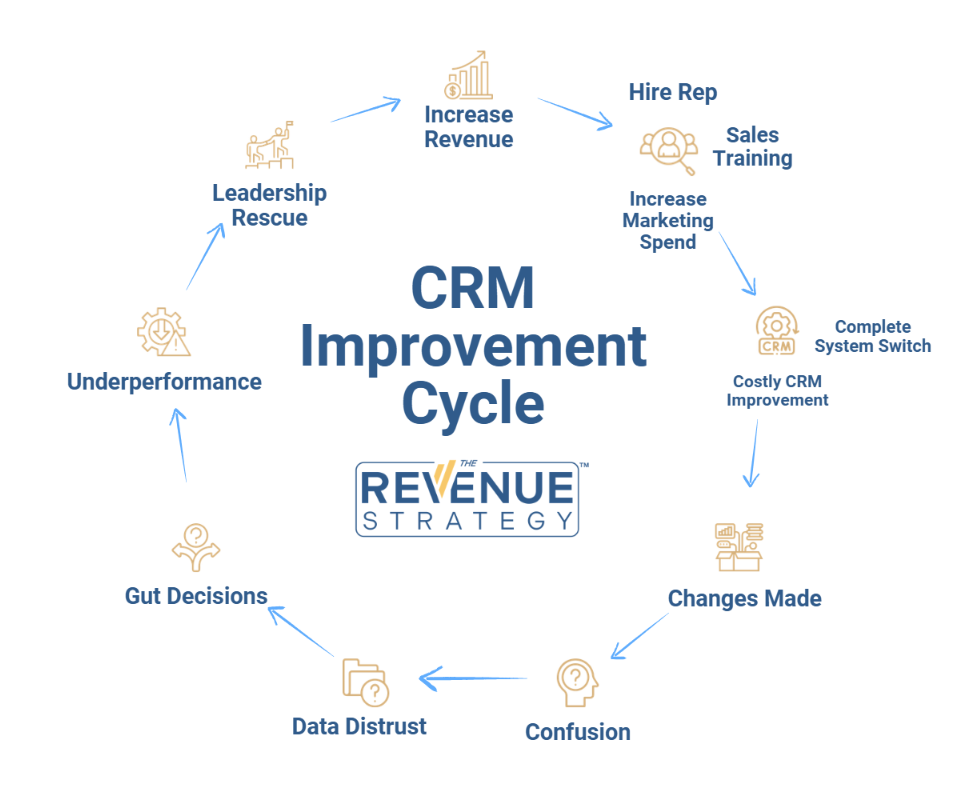
You want to increase revenue.
To do that, you need more sales.
So you hire another sales rep. Or a sales manager.
Or you increase your marketing spend.
Or you invest in sales training.
On paper, this should work.
But now your CRM needs to be improved to support the growth.
Fields get added. Pipelines get tweaked. Automations get built.
The changes get made…
but there’s still confusion.
Your team doesn’t fully understand how to use the CRM.
Everyone uses it a little differently.
Important steps happen outside the system.
So you stop trusting the data.
Reports don’t match what you feel is happening.
Forecasts look off.
Dashboards raise more questions than answers.
So you do what most founders do next.
You start making gut decisions again.
You jump back into deals.
You manually review pipelines.
You coach reps one-on-one because it feels faster.
And yet…
The team still underperforms.
The new revenue goals don’t get hit.
Growth feels heavier, not easier.
So you step back in even more — because you still want to increase revenue…
That’s the cycle.And until your CRM reflects how revenue actually happens in your business —
this loop keeps repeating.